
The 2024 hearing
Senator Dick Durbin, a long-time advocate for payment system reform, is renewing his fight against what he describes as the “ Visa- Mastercard duopoly.”

Market share depends on whether the measure is purchase volume, transaction count or cards and on the year.
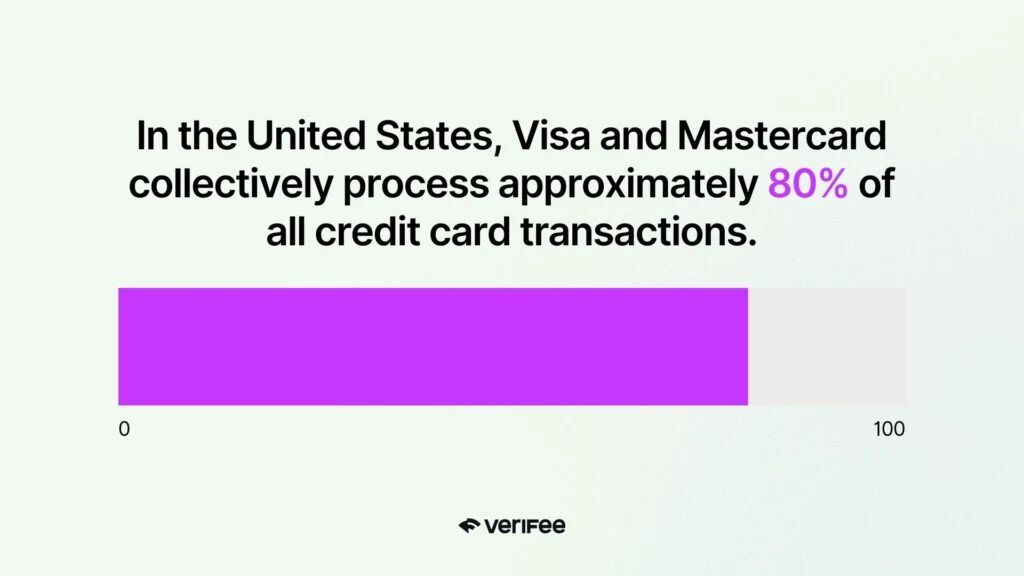
At the November 19, 2024 Senate Judiciary Committee hearing, then-chairman Dick Durbin (D-Ill.) described card fees as a hidden contributor to the prices consumers pay, “on everything from furniture to eggs.” The chairmanship references in this article describe that 2024 hearing, not his role in October 2026.
Durbin described interchange, paid to issuing banks, as a major component of swipe fees. The article’s 1%–3% range is a historical description, not a universal rate. interchange, network assessments and processor markup are separate parts of the merchant’s total processing cost.
As chairman at the time of the hearing, Durbin promoted the Credit Card Competition Act as a route to increased competition in credit-card processing.
His committee chairmanship was nearing its end in the 2024 political context. The article’s “last stand” framing is editorial, not a claim that this was the final possible legislative effort.
What the proposal would change
The 2023 Credit Card Competition Act proposal covered credit cards issued by institutions with more than $100 billion in assets. It would generally require at least two unaffiliated networks, with at least one outside Visa and Mastercard and protect routing choice. It would not simply require every bank to add a network and would not set a credit-card interchange cap.
U.S. merchant processing fees include credit, debit and prepaid cards across covered brands. The total is not solely credit-card interchange or money retained entirely by Visa and Mastercard.
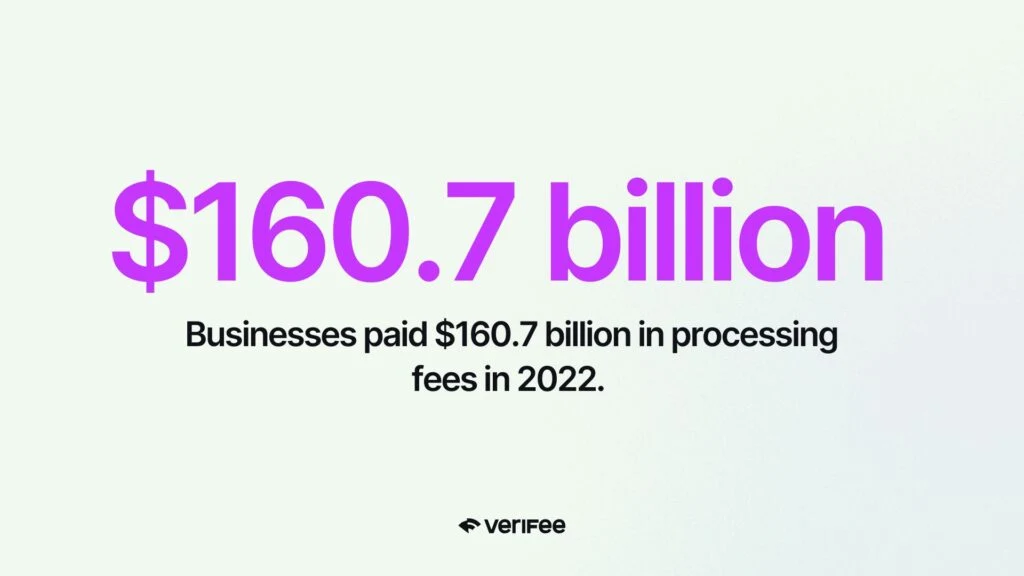
Merchants pay processing costs when customers use cards. Some of those costs may be reflected in general prices, but the extent of any price effect depends on competition, merchant behavior and other expenses.
By creating more competition among networks, the proposed legislation could help reduce these costs for businesses and potentially lower prices for everyday consumers.
Debit reform & competing arguments
Durbin’s efforts build on his previous success with the Durbin Amendment, a provision of the 2010 Dodd-Frank Act.
The Durbin Amendment led to Regulation II limits on debit interchange for covered issuers, subject to exemptions and rules on network exclusivity and merchant routing. Its small-issuer interchange exemption and its routing requirements are distinct. It did not cap every debit card’s fees and did not create a credit-card interchange cap.
The article cited an estimated $10 billion in annual merchant savings from debit reform. This is a historical estimate, not a guaranteed result for every merchant or an established measure of consumer savings. Academic and policy assessments dispute the size and distribution of benefits and note possible effects on bank-account fees and rewards.
Durbin believes similar principles can apply to credit card processing, where merchants currently have little to no choice in routing transactions outside Visa and Mastercard.
Executives from Visa and Mastercard maintained that the size and scale of their networks help deliver value to those same consumers and businesses.
Network executives argued that cybersecurity investments, transaction reliability and consumer protections deliver value. Those are their policy arguments, not proof that the proposed routing change would necessarily weaken security.
They countered that the payments landscape is competitive, with the recent rise of FinTechs and other players, where payments take place outside the card rails.
Durbin argued that the networks’ arrangements benefit large issuing banks and that greater routing choice could weaken their market power. Those descriptions are attributed advocacy, not a court finding.
In testimony at the 2024 hearing, Battenkill Books co-owner Christopher Callahan described high swipe fees as a challenge for merchants of every size and sector.
Callahan argued that many main-street businesses share this burden with customers through higher prices, surcharges or reduced services. Surcharge legality and card-network restrictions vary and the testimony is not permission to surcharge every payment.
Visa’s Bill Sheedy, then senior adviser to its CEO, described interchange as an interbank fee paid by acquirers to issuers for credit and debit purchases. His hearing testimony presented the network’s position on the value of its payment system.
Visa argued that it has an incentive to optimize network transactions rather than set interchange too high or too low. This is the company’s position, not an independent finding about its incentives or market power.
“We focus on growing and optimizing transactions on our network, which we can only do when merchants and consumers successfully and securely complete sales. Without those sales, we have no transactions to process.”
Support, scrutiny & VeriFee’s position
Senator Roger Marshall of Kansas has co-sponsored the legislation, making it a bipartisan effort.
Trade organizations, including the National retail Federation, have also rallied behind the bill, emphasizing its potential to save businesses billions of dollars annually.
Lower fees, advocates argue, would not only improve profit margins for merchants but could also lead to reduced prices for consumers.
Separately, the Justice Department sued Visa in September 2024, alleging monopolization of U.S. debit-network markets. The complaint concerns debit markets, not passage of the Credit Card Competition Act. Allegations are not findings of liability.
VeriFee, a company dedicated to uncovering hidden transaction fees, has emerged as a vocal supporter of Durbin’s initiative.
VeriFee’s mission aligns closely with the goals of the Credit Card Competition Act, as the company provides businesses with tools to understand and manage the often opaque costs of credit card processing. This involves demystifying complex payment structures, empowering businesses to make informed financial decisions and ultimately helping them reclaim control over their costs.
For VeriFee, the article’s support for Durbin’s initiative is about reducing opaque costs and advocating for a fairer payment ecosystem. It is VeriFee’s stated editorial position, not an independent guarantee that the legislation would produce savings.
The company’s advocacy reflects a broader push for accountability in an industry where hidden fees and lack of competition have long been the norm.
VeriFee’s support emphasizes the need for greater transparency in a system that affects every business accepting credit card payments and, by extension, every consumer paying with plastic.
Durbin has also made public awareness a central part of his strategy.
While interchange fees greatly impact prices, many consumers are unaware of how these costs are factored into their everyday purchases.
Durbin has repeatedly called for greater scrutiny of Visa and Mastercard, emphasizing the importance of bringing this issue to the forefront of public debate.
VeriFee echoes this call, showing transparency’s role in fostering trust and fairness in the marketplace. Critics of the bill often cite potential disruptions to fraud prevention and loyalty rewards programs as reasons for opposition.
Rewards, security & the road ahead
Supporters dispute warnings about security and rewards, while opponents argue that routing changes could affect fraud controls, economics and consumer benefits. The effects are contested, not established as either harmless or inevitable.
Many fraud-prevention tools can support multiple networks, but authentication, transaction data, liability rules and integration requirements still vary. Alternative routing requires a secure implementation rather than an assumption of equal outcomes.
Rewards programs are funded through multiple sources, including interchange revenue. They are not wholly independent of interchange economics. Whether issuers would change benefits under a routing mandate is uncertain and depends on how the policy is implemented and how issuers respond.
Advocates argue that these criticisms serve primarily to protect the status quo rather than address the legitimate concerns of businesses and consumers.
In the original 2024 hearing context, the end of Durbin’s committee chairmanship gave the push added urgency. A proposal’s introduction or hearing does not mean enactment. Consult the official Congress record for the current text and actions before treating any proposed requirement as law.
VeriFee’s support of Durbin’s initiative reflects a shared commitment to a more equitable and transparent payment system. By advocating for clarity and competition, we aim to empower businesses to thrive without being burdened by excessive fees.
As public awareness grows and pressure mounts on industry leaders, the call for reform is unlikely to fade.